NEWS

WHAT IS CCI?

The Moldovan CCI is the official representative of business people in Moldova.

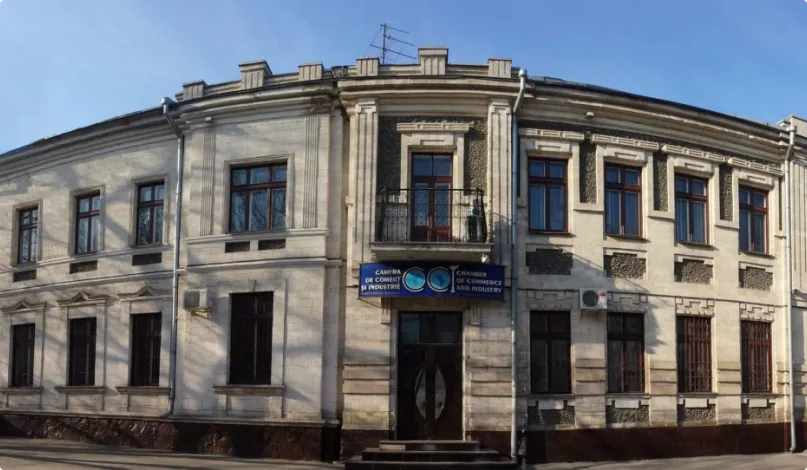
The Chamber of Commerce and Industry of Moldova (CCI) is the largest business association in Moldova, which brings together over 1100 members, large, small and medium-sized enterprises from all branches of economy and is a member of the International Chamber of Commerce (ICC) and the European Association of Chambers of Commerce (EUROCHAMBRES).

The CCI system includes 10 subsidiaries that provide the necessary assistance to companies, legal entities and individuals throughout the country.

Moldova’s Chamber of Commerce and Industry dates back over 100 years, being the most representative business organization, promoting the development and support of the business environment in Moldova.

CCI’s activity is regulated by the Law on the Chamber of Commerce and Industry of the Republic of Moldova, which confirms the Chamber’s status as a non-governmental, autonomous and independent organization representing the overall interests of Moldovan entrepreneurs.

The Chamber of Commerce and Industry of Moldova:

  • Represents the business environment both before the government and international institutions;
  • Facilitates strategic partnerships focused on attracting investments;
  • Promotes national and international trade relations;
  • Helps implement best practices for the country’s economic and social development.

Governing Bodies

The governing bodies of Moldova’s Chamber of Commerce and Industry are: the Congress, the Council, the Executive Bureau and the Chairperson.

The Congress is the Chamber’s supreme governing body which convenes once every 5 years. The scope of competence of CCI’s Congress includes: adopting the Chamber’s charter; developing and approving the Chamber’s main lines of activity and long-term programs; forming the Chamber’s governing bodies and setting their duties; electing the Chamber’s Chairperson; electing and dismissing members of the Committee of Censors; other duties set out in the Chamber’s charter.

The Council sets the Chamber’s main lines of work in between congresses, reports to the Congress and controls the work of the Chamber’s Executive Bureau. Members of the Chamber’s Council are elected by the Congress in the number of 75 persons from among the Chamber’s general members for a 5-year term.

The Executive Bureau runs the Chamber’s work in between council meetings. Members of the executive bureau are elected by the Chamber’s Council in the number of 15 persons from among Council members for a 5-year term. The Executive Bureau’s work is headed by the Chamber’s Chairperson.

The Committee of Censors controls the Chamber’s economic and financial activity. Members of the Committee of Censors are elected in the number of 7 legally capable persons from among the Chamber’s general members for a 5-year term.

President

Sergiu HAREA

Phone: (373 22) 22 15 52

Fax: (373 22) 23 44 25

e-mail: [email protected]

Vice-president

Natalia CALENIC

Phone: (373 22) 22 34 73

e-mail: [email protected]

Vice-president

Mihai BÎLBA

Phone: (373 22) 23 53 32

e-mail: [email protected]

Honorary President

Gheorghe CUCU

Phone: (373 22) 22 15 52

e-mail: [email protected]

HISTORY OF MOLDOVA’S CCI

The first Chamber of Commerce and industry emerged in the modern era. Thus, in 1599, an association was founded in Marseille, France to represent the interests of merchants and businessmen before authorities and partners.

The need to create a structure of national trade supervision and management was also felt in Bessarabia.

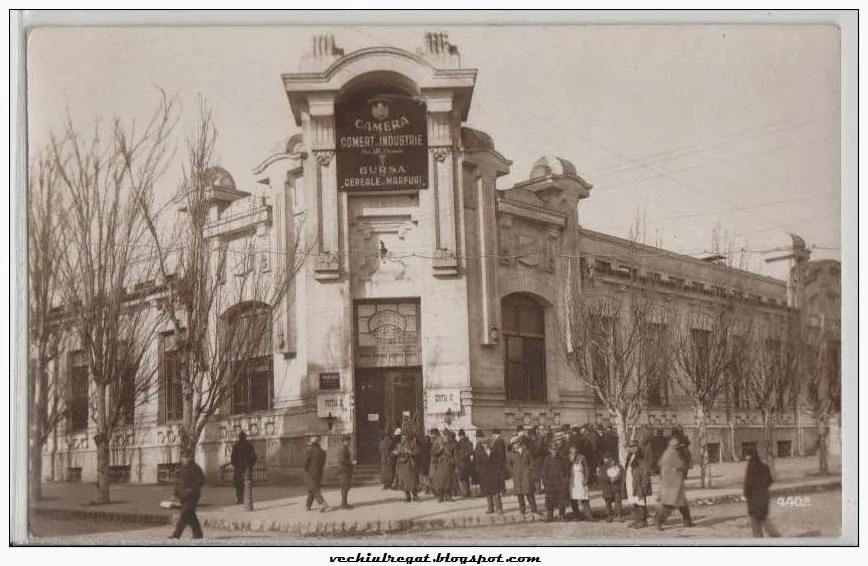
The first Chamber of Commerce and industry in Bessarabia was founded on 24 October 1918 by the decree of King Ferdinand. Seated in Chisinau, it covered the counties of Chisinau, Balti, Orhei, Soroca, Bender, Ackerman, Ismail and Cahul. The Chamber consisted of 35 members – merchants and manufacturers.

The first Chamber in Chisinau was in charge of processing information requests concerning market prices in Chisinau and other towns, authorized the removal of goods that for some reason were not very popular with buyers from commercial circulation, made advertisements to promote goods, organized exhibitions etc.

Subsequently, several chambers of commerce were formed on the territory of Bessarabia. In 1935 they merged into a Federation of Сhambers of Commerce and Industry of Bessarabia, which was part of the Romanian Union of Chambers of Commerce (founded in 1925).

After the establishment of Soviet power, CCI had ceased its activity. However, at the border of 1960-1970s the Chamber’s activity was partially restored because Moldova has consolidated its foreign economic ties.

In 1968, CCI of the former USSR created in Ungheni its first representative office in MSSR.

On 4 November 1969, following a request from the republic’s leadership, the Chamber of Commerce and Industry decided to open an office in Chisinau.
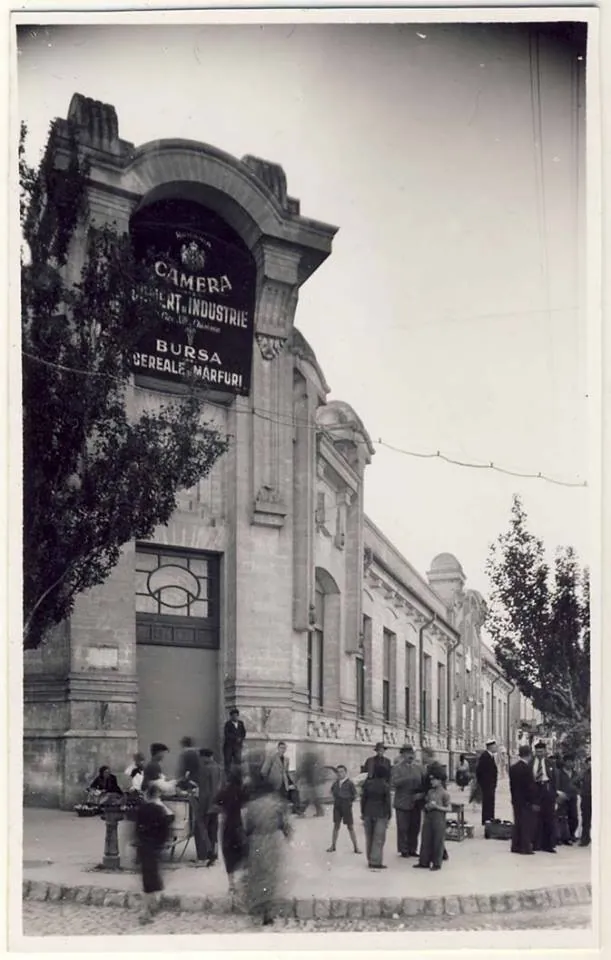
Having worked for almost two years, the office showed that it could solve the tasks that lie before an institution of this kind. Thus, it became necessary to give this republican organization a proper legal status. On 30 November 1972, the republican assembly of the office decided to form the CCI of MSSR.

Since 1991, the Moldovan Chamber of Commerce and Industry acquired the status of a nongovernmental body of the newly independent state. On 20 January 1994, the president of Moldova signed the decree “On the Chamber of Commerce and Industry of the Republic of Moldova”. The document laid the foundation for the creation of a legal framework for the Chamber’s activity.

On 13 May 1999, the Parliament of Moldova adopted the “Law on the CCI of the Republic of Moldova”, promulgated on 5 July the same year!

Art. 27 of the said law sets a 3-year term for forming and convening the Constituent Congress of CCI.

In the early 2000s, CCI branch offices were formed.

On 6 September 2002, the First (Constituent) Congress of CCI of Moldova was held which examined and approved CCI’s charter, elected the institution’s governing bodies and adopted the main lines and program of activity for 2002-2007.

Then another 4 ordinary congresses followed, held every 5 years. The latter, organized on 10 August 2017, outlined the main priority directions for 2017-2022.

Play Video